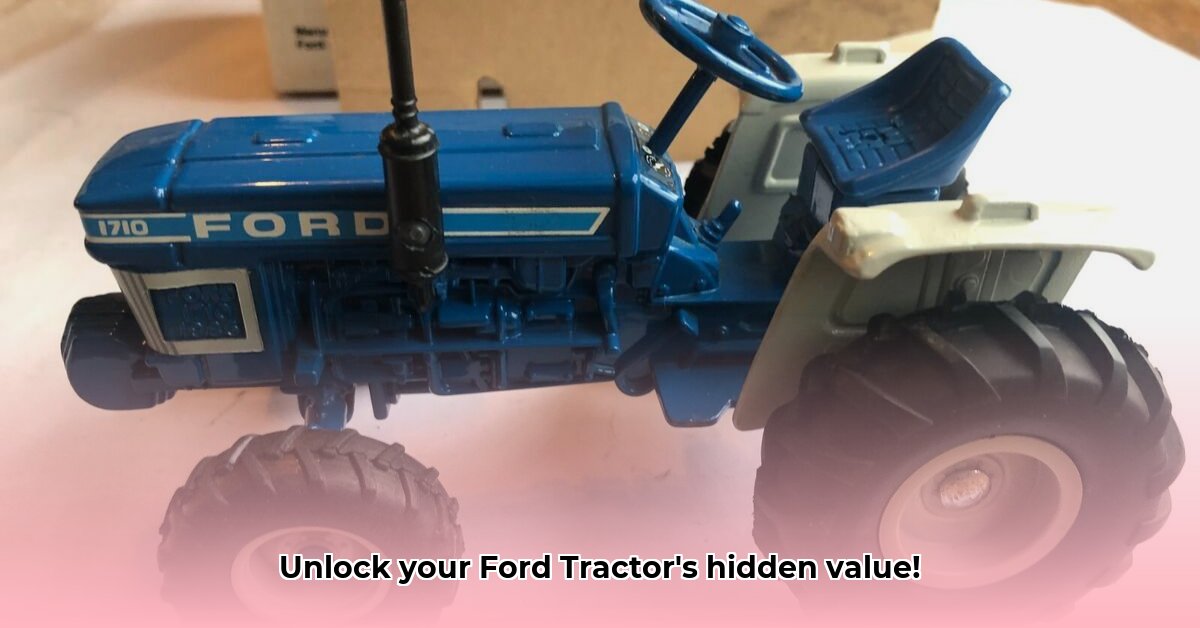
1710 Ford Tractor Value: Your Guide to Smart Buying and Selling
Thinking about buying or selling a used Ford 1710 tractor? Understanding its true value is crucial for a successful transaction. This guide breaks down key factors influencing a 1710's worth and provides step-by-step advice. For more information on similar Ford models, check out our guide on the Ford 1320.
What Makes a 1710 Ford Tractor Valuable?
Several interconnected factors determine a used 1710 Ford tractor's price, similar to valuing a used car.
Operating Hours: Lower hours generally mean higher value. A tractor with 800 hours typically commands a higher price than one with 1200 hours due to reduced wear and tear. Isn't it logical to expect a machine with less use to be in better shape?
Drive Type (2WD vs. 4WD): Four-wheel-drive (4WD) models often fetch higher prices due to increased traction and versatility. However, market data shows this isn't always conclusive; comparable sales data is essential for accurate valuation.
Condition: A well-maintained, clean tractor in good working order commands a premium. Significant mechanical problems drastically reduce value. Would you rather buy a sparkling clean machine or a rusty one with potential issues? The answer is clear.
Age: Even within the 1710 series, the manufacturing year impacts value. Older models (e.g., a 1983 model) might sell for less than a newer model (e.g., a 1986 model) due to age and potential repair needs.
Included Accessories: Additional implements (plows, harrows, etc.) in good condition can increase value. Original manuals and maintenance records also boost perceived value.
How to Figure Out the Real Value of Your 1710
Determining the precise value requires careful assessment. Follow these steps:
1. Market Research: Research recent sales of comparable 1710 tractors on online marketplaces and auction sites. Note hours of use, condition, and drive type (2WD or 4WD). This initial research is a crucial foundation for accurate pricing.
2. Thorough Inspection: A hands-on inspection is essential. Look for rust, leaks, and damage. Check the engine, transmission, hydraulics, and all components. Consider hiring a qualified mechanic for a comprehensive assessment. The cost is a small price to pay for peace of mind.
3. Documentation Review: Request service records and maintenance logs. Documented history significantly impacts perceived value and offers confidence in the tractor's maintenance. Transparency from the seller is invaluable.
4. Comparative Analysis: Compare features, condition, and prices of several tractors, factoring in potential repair costs. This helps create an informed valuation.
Understanding the Price Range and Risks
1710 Ford tractor prices can range from approximately $4,750 to $29,500, depending on condition, operating hours, and accessories. Tractors in top condition with low hours command higher prices.
Here's a risk assessment:
| Risk Factor | Likelihood | Impact | Mitigation Strategy |
|---|---|---|---|
| Major Mechanical Issues | Moderate | High | Thorough pre-purchase inspection by a qualified mechanic; review maintenance logs. |
| Hidden Problems | Moderate | High | Independent mechanical inspection; negotiate a warranty or inspection contingency. |
| Market Price Fluctuations | Moderate | Moderate | Track market trends; negotiate a fair price. |
| Parts Availability | Low | Moderate | Investigate parts availability before buying. |
Tips for Buyers and Sellers
Accurate valuation benefits both buyers and sellers. Buyers should prioritize thorough inspections, while sellers should provide accurate descriptions and supporting documentation. A fair price benefits both parties. A well-maintained 1710 can retain its value surprisingly well.
How to Assess the Condition of a Used Ford 1710 Tractor Before Buying
Key Takeaways:
- The Ford 1710, suitable for smaller farms, presents age-related challenges like parts availability.
- A comprehensive pre-purchase inspection is critical.
- Budget for potential repairs and maintenance.
- Investigate parts availability before purchase.
Assessing the Ford 1710: A Step-by-Step Guide
A methodical inspection is crucial before purchasing.
Step 1: Visual Inspection: Check for dents, rust, paint damage, tire condition, and the condition of the three-point hitch and implements.
Step 2: Engine and Fluids: Inspect the engine for leaks and corrosion. Check oil, coolant, transmission fluid, and hydraulic fluid levels and condition. Dirty or low fluids suggest potential problems.
Step 3: Operational Check: Start the engine; listen for unusual noises. Test the transmission, brakes, three-point hitch, and PTO (if available) for smooth operation. If possible, test under a light load.
Step 4: Parts Availability: Research local dealers and salvage yards to assess parts availability for your area before purchasing the tractor. This step often determines the long-term cost of ownership.
Step 5: Negotiation: Use your assessment to negotiate a fair price, considering any discovered issues and potential repair costs.
Pros and Cons of a Used Ford 1710
| Pros | Cons |
|---|---|
| Simple design, easy maintenance | Parts availability may be challenging |
| Suitable for light agricultural tasks | Potential for higher repair costs |
| Relatively affordable initial cost | Limited power and features compared to modern tractors |
| Good fuel efficiency | May require more frequent maintenance |